Blog

  • Autel AL319 Review: Affordable OBD2 Code Reading for Basic Diagnostics

    Research-based review: We have not hands-on tested this unit. Our assessment is based on Autel documentation, current Amazon marketplace data, and comparison with nearby verified models.
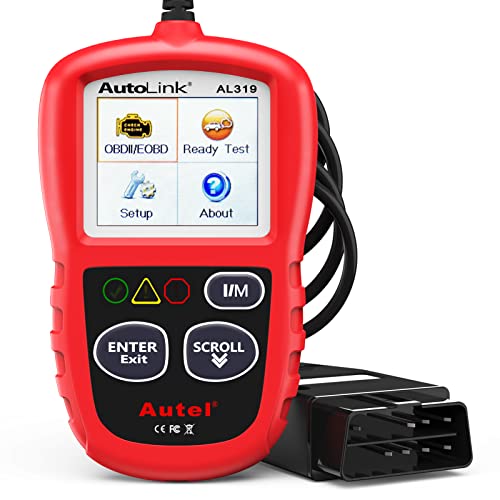
    Autel AL319 product image on Amazon
    Product image provided via Amazon Creators API. Image links to the relevant Amazon product page.

    Quick Verdict

    The Autel AutoLink AL319 is a low-cost, self-contained OBD-II/CAN code reader for drivers who mainly need Check Engine diagnostics. Autel verifies generic and manufacturer-specific OBD-II code retrieval, code/MIL clearing, freeze-frame data, live PCM data, and I/M readiness. At our current Amazon snapshot of $29.99, it is best viewed as a focused engine/emissions tool—not an ABS, SRS, full-system, or bidirectional scanner.

    Affiliate disclosure: As an Amazon Associate, Scan Tool Compass earns from qualifying purchases.

    Check current Autel AL319 price on Amazon →

    Key Specifications

    Area Verified information
    Tool type OBD-II/CAN code reader
    Code retrieval Generic and manufacturer-specific OBD-II codes
    Code clearing Verified for eligible OBD-II codes / MIL
    Freeze frame Verified
    Live data Live PCM data verified
    I/M readiness Verified
    Vehicle scope Autel states most 1996-and-newer OBD-II/CAN vehicles
    Price snapshot $29.99 USD; time-sensitive

    What the Autel AL319 Can Do

    The AL319 covers the core standardized OBD-II jobs most first-time scanner buyers actually need. It can retrieve diagnostic trouble codes, clear eligible OBD-II codes and the Malfunction Indicator Lamp after a repair, show freeze-frame data captured around a fault, display live PCM data, and check I/M readiness status.

    Those functions make it useful for a Check Engine Light, basic engine/emissions troubleshooting, and checking whether readiness monitors have completed before an emissions inspection.

    Remember that a diagnostic code is a clue, not a parts order. A code tells you the condition the vehicle detected; it does not prove that a specific sensor or component has failed.

    Where the AL319 Fits in the Scanner Market

    This is a basic code reader. That is not a criticism. If your real need is engine/emissions OBD-II diagnostics, a simple scanner can be faster and cheaper than buying a tablet loaded with functions you never use.

    Autel states that the AL319 works with most 1996-and-newer OBD-II/CAN vehicles, but “most” is still a compatibility caveat. Imported-market vehicles and unusual implementations should be checked before purchase.

    Important Limitations

    • No verified ABS or SRS diagnostics: Do not buy the AL319 for an ABS or airbag warning light.
    • No full-system scan: Our verified source does not establish access to body, transmission-enhanced, steering, HVAC, or other manufacturer-specific modules.
    • No bidirectional active tests: It is not designed to command actuators.
    • No verified service-reset package: Oil reset, EPB service, BMS registration, ABS bleeding, and similar functions are outside the verified scope used for this review.

    Best For

    • Drivers who want an inexpensive glove-box scanner.
    • Beginners diagnosing a Check Engine Light.
    • Owners checking I/M readiness before emissions testing.
    • DIY users who want live PCM data without using a phone app.

    Who Should Skip It

    Skip the AL319 if your warning light is ABS or SRS, if you need transmission/body module access, or if active tests and maintenance procedures are part of your work. In those cases, move up a scanner tier rather than expecting a basic OBD-II reader to cover proprietary modules.

    Our guide to Basic Code Reader vs Full-System Scanner explains the difference.

    Alternatives and Upgrade Path

    If you want another basic handheld reader, compare this tool with the ANCEL AD310 or FOXWELL NT301. If you need ABS access and battery testing, the Autel AL549 is a more capable step up.

    If you prefer a phone-based workflow, browse our Bluetooth OBD2 scanners.

    Related Reading

    Explore This Topic

    Methodology & Sources

    This review uses Autel’s official AL319 product information and user documentation. We do not convert marketplace feature claims into facts unless they are supported by the verified brief.

    • Autel AL319 official product information

    The Practical Takeaway

    The Autel AL319 makes sense when the job is simple: read Check Engine codes, inspect freeze frame/live PCM data, clear eligible codes after repair, and check readiness. At this price level, its strength is focus. If your diagnostic needs extend beyond standardized OBD-II engine/emissions functions, buy the correct enhanced tool instead of stretching the AL319 beyond its verified scope.
    Check current Autel AL319 availability on Amazon →

  • FOXWELL NT604 Elite vs THINKCAR 662: Four-System Scanner or Bidirectional Upgrade?

    FOXWELL NT604 Elite vs THINKCAR 662: Four-System Scanner or Bidirectional Upgrade?

    Research-based comparison: We have not hands-on tested these scanners. This comparison uses first-party FOXWELL and THINKCAR documentation, current Amazon price snapshots, and our verified product briefs. Vehicle and function coverage can vary by year, make, model, and module.

    Quick Answer

    The FOXWELL NT604 Elite is the better choice if you want a straightforward four-system scanner focused on engine, transmission, ABS, and SRS diagnostics. The THINKCAR THINKSCAN 662 is the more capable option if you want those same four systems plus verified bidirectional active tests, 12 service/reset functions, CAN FD support, AutoVIN diagnostics, and lifetime free updates.

    At the Amazon snapshots used here, the FOXWELL NT604 Elite was listed at $169.99 and the THINKCAR 662 at $175.99. Because the prices were close in this snapshot, the decision is mainly about whether you need active tests and service functions.

    Affiliate disclosure: As an Amazon Associate, Scan Tool Compass earns from qualifying purchases.

    Check FOXWELL NT604 Elite on Amazon →
    Check THINKCAR THINKSCAN 662 on Amazon →

    FOXWELL NT604 Elite vs THINKCAR 662: Verified Comparison

    Area FOXWELL NT604 Elite THINKCAR THINKSCAN 662
    Engine diagnostics Verified Verified
    Transmission diagnostics Verified Verified
    ABS diagnostics Verified Verified
    SRS / airbag diagnostics Verified Verified
    Bidirectional active tests Do not describe as bidirectional based on our first-party source Verified
    Service/reset functions Not used as a verified comparison point here 12 functions verified by THINKCAR
    CAN FD Not established in our verified brief Verified
    AutoVIN Not established in our verified brief Verified
    Update terms Not used as a verified comparison point here Lifetime free updates stated by THINKCAR
    Current price snapshot $169.99 $175.99

    Why the FOXWELL NT604 Elite Is Still a Sensible Choice

    FOXWELL clearly positions the NT604 Elite as a four-system scanner. The manufacturer explicitly lists engine, transmission, ABS, and airbag/SRS diagnostics on supported vehicles.

    That scope is useful for DIY owners who have outgrown a basic Check Engine reader but do not need a full-system or bidirectional platform. It gives access to the four systems that commonly matter most when dashboard warning lights extend beyond the engine.

    The important thing is not to overstate it. Based on the first-party material we verified, we do not describe the NT604 Elite as an all-system or bidirectional scanner.

    Read our full FOXWELL NT604 Elite review.

    What the THINKCAR 662 Adds

    THINKCAR confirms the THINKSCAN 662 covers ECM, TCM, ABS, and SRS diagnostics, putting it in the same broad four-system conversation as the NT604 Elite.

    The major upgrade is bidirectional control. THINKCAR identifies the 662 as a bidirectional diagnostic tool with active tests, meaning supported vehicle modules can be commanded during diagnosis rather than only read.

    THINKCAR also lists 12 service/reset functions, CAN FD support, AutoVIN diagnostics, and lifetime free updates. Those are meaningful additions for an advanced DIYer who regularly performs maintenance procedures or wants to test actuators.

    Read our full THINKCAR THINKSCAN 662 review.

    Which Is Better for ABS and SRS Codes?

    Both have verified ABS and SRS diagnostic coverage on supported vehicles, so neither wins simply on basic code access.

    If your goal is mainly to read and clear faults in engine, transmission, ABS, and airbag systems, the NT604 Elite can be enough. If you want to move beyond code/data access into active testing and service procedures, the THINKCAR 662 has the stronger verified capability set.

    Which Is Better for Active Tests?

    This is the clearest dividing line. THINKCAR explicitly verifies bidirectional active tests for the 662. Our first-party FOXWELL source for the NT604 Elite does not establish bidirectional capability, so we do not market it as such.

    That does not mean every possible actuator test is available on every vehicle with the THINKCAR. Active-test coverage remains year/make/model/module-specific. Verify the exact test you need before purchasing.

    Which Is Better for Service Work?

    THINKCAR again has the stronger verified evidence. The company states that the 662 includes 12 service/reset functions. Our verified NT604 Elite brief does not contain a comparable first-party service-function list, so this comparison does not assume one.

    If a specific maintenance function—such as a reset or relearn—is the reason for your purchase, use THINKCAR’s current coverage information to confirm that exact procedure on your vehicle.

    Is the THINKCAR Automatically the Better Buy Because Prices Are Close?

    Not necessarily. The price snapshots were only about six dollars apart, but price is time-sensitive. More importantly, simpler tools can be easier to use if you do not need the extra capabilities.

    A buyer who mainly wants reliable four-system code/data access may prefer the focused NT604 Elite workflow. A buyer who actually intends to use active tests and service functions gets more verified capability from the THINKCAR 662.

    Who Should Buy the FOXWELL NT604 Elite?

    • You mainly need engine, transmission, ABS, and SRS diagnostics.
    • You want to move beyond a basic OBD-II reader without paying for functions you may not use.
    • You do not require verified bidirectional active tests.
    • You will verify vehicle coverage for the exact systems you need.

    Who Should Buy the THINKCAR 662?

    • You want four-system diagnostics plus active tests.
    • You value 12 verified service/reset functions.
    • CAN FD and AutoVIN are useful in your workflow.
    • You value THINKCAR’s stated lifetime free updates.
    • You understand that function coverage still varies by vehicle.

    Methodology & Sources

    This comparison uses only facts stored in our verified briefs. FOXWELL first-party documentation confirms NT604 Elite engine, transmission, ABS, and SRS scope. THINKCAR first-party documentation confirms the 662’s four-system diagnostics, bidirectional active tests, 12 service/reset functions, CAN FD, AutoVIN, and lifetime free updates.

    • FOXWELL NT604 Elite official product page
    • FOXWELL official manuals
    • THINKCAR THINKSCAN 662 official product page

    The Practical Takeaway

    The FOXWELL NT604 Elite is the cleaner four-system choice for buyers who mainly need engine, transmission, ABS, and SRS diagnostics. The THINKCAR 662 is the stronger upgrade if you want active tests and service functions as well. When the prices are close, the THINKCAR offers more verified capability—but only pay for it if those extra functions match the work you actually do.

  • TOPDON AD900 Lite vs XTOOL A30M: Which Bidirectional Scanner Is the Better Fit?

    TOPDON AD900 Lite vs XTOOL A30M: Which Bidirectional Scanner Is the Better Fit?

    Research-based comparison: We have not hands-on tested these scanners. This comparison uses first-party TOPDON and XTOOL documentation, current Amazon price snapshots, and our verified product briefs. Vehicle-specific coverage remains conditional.

    Quick Answer

    The TOPDON AD900 Lite / ArtiDiag900 Lite is the better-documented standalone choice if you want a tablet-style full-system scanner with verified bidirectional control, eight named service functions, Bluetooth VCI connectivity, Wi-Fi, and two years of free software updates. The XTOOL A30M is the lower-cost wireless option if you prefer using iOS or Android and want verified full-system diagnostics plus bidirectional functions, but our first-party source identifies the product family as A30M rather than explicitly confirming every marketplace-specific “V2.0” claim.

    At the Amazon snapshots used here, the TOPDON was listed at $299.25 and the XTOOL A30M V2.0 listing at $151.00. Prices and availability can change.

    Affiliate disclosure: As an Amazon Associate, Scan Tool Compass earns from qualifying purchases.

    Check TOPDON AD900 Lite on Amazon →
    Check XTOOL A30M on Amazon →

    TOPDON AD900 Lite vs XTOOL A30M: Verified Comparison

    Area TOPDON AD900 Lite XTOOL A30M
    Full-system diagnostics Verified on supported vehicles Verified by XTOOL for A30M
    Bidirectional control Verified Verified by XTOOL for A30M
    Device format Standalone tablet with Bluetooth VCI and Wi-Fi Compact wireless scanner used with iOS/Android
    Service functions Eight named functions verified Not used as a verified comparison point here
    IMMO TOPDON explicitly states no IMMO Not established in our verified brief
    Update terms Two years free software updates verified Not established in our verified brief
    Version caveat First-party naming confirms AD900 Lite / ArtiDiag900 Lite First-party source confirms A30M family; marketplace “V2.0” suffix not independently confirmed
    Current price snapshot $299.25 $151.00

    Why the TOPDON Costs More

    TOPDON documents a more complete standalone package. The ArtiDiag900 Lite / AD900 Lite provides full-system diagnostics and bidirectional control on supported vehicles. TOPDON also explicitly names eight service functions: oil reset, brake reset, steering-angle calibration, battery-management reset, ABS bleeding, electronic-throttle adaptation, DPF functions, and TPMS reset.

    The hardware workflow is also different. TOPDON documents a tablet with Bluetooth VCI connectivity and Wi-Fi rather than a small adapter that depends on your phone or tablet for the interface.

    TOPDON states that the product includes two years of free software updates and explicitly documents that IMMO functionality is not included. Those details make the product easier to evaluate because both capabilities and boundaries are spelled out.

    Read our full TOPDON AD900 Lite review.

    Why the XTOOL A30M Is Interesting at a Lower Price

    XTOOL’s first-party catalog identifies the A30M as a compact wireless OBD2 scanner for DIY users and professional technicians. XTOOL confirms iOS and Android support and states that the A30M provides full-system diagnostics and bidirectional functions.

    That combination makes the A30M attractive to buyers who already have a compatible phone or tablet and want to avoid paying for a dedicated diagnostic tablet.

    The important caveat is version identity. The marketplace listing in our database uses the suffix V2.0, while the first-party catalog source we verified identifies the family simply as A30M. We therefore use the verified A30M family capabilities but do not invent version-specific differences that our source does not establish.

    Read our full XTOOL A30M V2.0 review.

    Which Is Better for Bidirectional Diagnosis?

    Both have verified bidirectional capability at the product-family level used in our research. The difference is not simply “one has active tests and the other does not.”

    The TOPDON has a stronger documented standalone workflow and a clearer set of verified service functions. The XTOOL has the lower entry price and a mobile-device workflow. In either case, the exact active tests available depend on the year, make, model, and module.

    If a specific actuator test is the reason you are buying, check the manufacturer’s vehicle/function coverage rather than relying on the generic word “bidirectional.”

    Which Is Better for Service Functions?

    TOPDON wins on documentation in our verified source set because the company explicitly names eight service functions. Our verified XTOOL brief does not establish a comparable service-function list, so we do not fill that gap with marketplace claims.

    That does not prove the A30M can never perform service functions. It means we do not use unverified claims as a basis for this comparison.

    Which Is Better for a Phone-Based Workflow?

    The XTOOL A30M is the obvious fit if you specifically want a compact wireless device that works through iOS or Android. Your phone or tablet becomes the display and interface.

    The TOPDON makes more sense if you prefer a dedicated diagnostic device with its own tablet, Wi-Fi, and Bluetooth VCI. That costs more, but it keeps the diagnostic environment self-contained.

    Who Should Buy the TOPDON AD900 Lite?

    • You want a dedicated tablet rather than using your phone.
    • You need verified full-system diagnostics and bidirectional control.
    • You value eight explicitly documented service functions.
    • You want clearly documented update terms.
    • You understand that IMMO is not included.

    Who Should Buy the XTOOL A30M?

    • You want full-system and bidirectional capability in a lower-cost wireless format.
    • You are comfortable using iOS or Android as the interface.
    • You do not need us to assume version-specific “V2.0” features beyond what XTOOL confirms for the A30M family.
    • You will verify the exact vehicle/function coverage before purchase.

    Methodology & Sources

    This comparison separates verified first-party facts from marketplace naming. TOPDON first-party documents identify ArtiDiag900 Lite / AD900 Lite and confirm full-system diagnostics, bidirectional control, eight named service functions, Bluetooth VCI, Wi-Fi, no IMMO, and two years of free updates. XTOOL’s first-party catalog confirms A30M iOS/Android support, full-system diagnostics, and bidirectional functions while not explicitly confirming the marketplace “V2.0” suffix in the source we reviewed.

    • TOPDON ArtiDiag900 Lite official product profile
    • TOPDON official user manual
    • XTOOL official product catalog

    The Practical Takeaway

    Choose the TOPDON AD900 Lite if you want the better-documented, self-contained diagnostic platform and can justify the higher price. Choose the XTOOL A30M if your priority is lower cost, mobile-device convenience, and verified full-system plus bidirectional capability. The key caveat is that our XTOOL verification supports the A30M family, not every marketplace-specific V2.0 marketing detail.

  • Innova 5210 vs Autel AL549: Which ABS and Battery Scanner Fits You?

    Innova 5210 vs Autel AL549: Which ABS and Battery Scanner Fits You?

    Research-based comparison: We have not hands-on tested these scanners. This page uses first-party Innova and Autel documentation, current Amazon price snapshots, and our verified product briefs. Vehicle-specific functions remain conditional unless the manufacturer confirms coverage for the exact vehicle.

    Quick Answer

    The Innova 5210 is the stronger fit if you want a DIY-oriented scanner with verified Check Engine and ABS code scanning, battery/charging-system testing, oil-light reset support, and Bluetooth connectivity to the RepairSolutions2 app. The Autel AL549 is the better fit if your priority is a focused handheld OBD-II/ABS tool with all 10 OBD-II test modes, live data, I/M readiness, AutoVIN-assisted code identification, ABS code read/erase, and a verified battery-test function.

    At the Amazon snapshots used for this comparison, the Innova 5210 was listed at $89.99 and the Autel AL549 at $62.10. Prices and availability can change.

    Affiliate disclosure: As an Amazon Associate, Scan Tool Compass earns from qualifying purchases.

    Check Innova 5210 on Amazon →
    Check Autel AL549 on Amazon →

    Innova 5210 vs Autel AL549: Verified Comparison

    Area Innova 5210 Autel AL549
    Core OBD-II diagnostics Verified Verified; all 10 OBD-II test modes stated by Autel
    Check Engine codes Verified Verified
    ABS code access Verified Verified read/erase
    Live data Verified Verified
    Freeze frame Verified Verified
    Battery testing Battery and charging-system testing verified Battery-test function verified
    Oil reset Verified in Innova comparison information Not established in our verified AL549 brief
    Phone app connectivity RepairSolutions2 via Bluetooth; iOS/Android Not used as a verified comparison point here
    SRS / airbag access Innova explicitly indicates no Not indicated in Autel’s official comparison scope used here
    Full-system scan Innova explicitly indicates no Not indicated in our verified AL549 brief
    Bidirectional tests Innova explicitly indicates no Not a verified capability in our brief
    Current price snapshot $89.99 $62.10

    Where the Innova 5210 Stands Out

    The 5210 combines a few DIY-friendly functions that make it more than a bare Check Engine reader. Innova confirms Check Engine and ABS code scanning, OBD live data, Mode 6/freeze-frame functions, emissions/readiness assistance, and battery plus charging-system testing.

    Innova also documents oil-light reset support for the 5210 and Bluetooth connectivity to the RepairSolutions2 app. That app layer can be useful for drivers who want repair information and phone-based assistance alongside a standalone scanner.

    Its limitations are also unusually clear. Innova indicates the 5210 does not provide SRS airbag-code access, all-system scanning, BMS reset, ABS bleeding, EPB reset, or bidirectional system tests. That transparency makes it easier to place the tool correctly: it is an enhanced entry-level DIY scanner, not a workshop tablet.

    Read our full Innova 5210 review.

    Where the Autel AL549 Stands Out

    Autel positions the AL549 as a professional OBD-II scan tool and confirms support for all 10 OBD-II test modes. Its verified functions include reading and erasing codes, freeze frame, live data, I/M readiness, and AutoVIN-assisted code identification.

    Autel also confirms ABS code read/erase support and a battery-test function. For a buyer who wants a focused handheld scanner and does not need a phone-app ecosystem, that is a strong set of practical functions at the lower price snapshot used here.

    The important boundary is scope. The official comparison material used for our verification does not indicate SRS, enhanced transmission, or broader full-system diagnostics for the AL549. We therefore do not present it as a full-system scanner.

    Read our full Autel AL549 review.

    Which Is Better for ABS Diagnostics?

    Both have verified ABS code access, so neither wins simply because the letters “ABS” appear on the box. The real question is what else you need around that function.

    The 5210 fits a driver who wants ABS code scanning alongside Innova’s app ecosystem, oil reset, and battery/charging checks. The AL549 fits a buyer who prefers Autel’s all-10-mode OBD-II focus plus ABS read/erase and battery testing.

    Neither should be purchased on the assumption that it performs every ABS service procedure. For example, Innova explicitly indicates the 5210 does not provide ABS bleeding. Our verified AL549 brief does not establish ABS bleeding either.

    Which Is Better for Battery and Charging Checks?

    Both have a verified battery-related function, but the wording differs. Innova confirms battery and charging-system testing for the 5210. Autel confirms a battery-test function for the AL549.

    If charging-system testing is specifically important, Innova’s first-party documentation gives us the clearer verified claim. If your need is simply a scanner with a battery-test function plus ABS and OBD-II diagnostics, the AL549 remains relevant.

    Which Is Better for Beginners?

    The 5210 has the broader DIY ecosystem because of RepairSolutions2 connectivity and Innova’s consumer-oriented positioning. That can help a beginner who wants additional repair context rather than just raw codes.

    The AL549 has a simpler value proposition: a dedicated handheld scanner with OBD-II, ABS, and battery functions. Buyers who prefer not to manage an app may find that workflow more straightforward.

    Who Should Buy the Innova 5210?

    • You want Check Engine and ABS scanning in one DIY-oriented tool.
    • You value battery and charging-system testing.
    • You want Innova’s RepairSolutions2 app connectivity.
    • Oil-light reset is useful to you.
    • You understand it is not SRS, full-system, or bidirectional.

    Who Should Buy the Autel AL549?

    • You want a focused handheld OBD-II/ABS scanner.
    • You value Autel’s verified all-10-mode OBD-II coverage.
    • You want live data, freeze frame, I/M readiness, ABS read/erase, and battery testing.
    • You prefer the lower price snapshot used in this comparison.
    • You do not need us to claim full-system or bidirectional capability that Autel does not verify for this model in our source set.

    Methodology & Sources

    We compare only capabilities established in our verified briefs. Missing evidence is labeled as not established rather than automatically interpreted as a missing product feature.

    • Innova 5210 official information
    • Innova scanner comparison information
    • Autel AL549 official information

    The Practical Takeaway

    The Innova 5210 is the more feature-diverse DIY choice, especially if you value the RepairSolutions2 app, oil reset, and documented charging-system testing. The Autel AL549 is the stronger value choice if you want a lower-priced, self-contained OBD-II/ABS scanner with all 10 OBD-II test modes and a verified battery-test function. Neither is the right tool if your actual requirement is SRS, broad full-system diagnostics, or bidirectional active tests.

  • Veepeak OBDCheck BLE+ vs OBDLink MX+: Which Bluetooth OBD2 Adapter Fits You?

    Veepeak OBDCheck BLE+ vs OBDLink MX+: Which Bluetooth OBD2 Adapter Fits You?

    Research-based comparison: We have not hands-on tested these adapters. This comparison uses first-party Veepeak and OBDLink documentation, current Amazon marketplace snapshots, and our verified product briefs. Enhanced app-based functions are treated as vehicle- and software-dependent unless the manufacturer explicitly verifies them.

    Quick Answer

    The Veepeak OBDCheck BLE+ is the better fit if you mainly want lower-cost generic OBD-II diagnostics through a phone or computer and are comfortable choosing your own app. The OBDLink MX+ costs substantially more but has a stronger verified ecosystem: iOS/Android/Windows support, all legislated OBD-II protocols, Ford MS-CAN, GM SW-CAN, OBDLink/OBDWiz software, many third-party apps, OEM-specific data add-ons, free firmware updates, and BatterySaver low-power mode.

    At the Amazon snapshots used for this comparison, the Veepeak was listed at $41.98 and the OBDLink MX+ at $139.95. Prices and availability can change.

    Affiliate disclosure: As an Amazon Associate, Scan Tool Compass earns from qualifying purchases.

    Check Veepeak OBDCheck BLE+ on Amazon →
    Check OBDLink MX+ on Amazon →

    Veepeak OBDCheck BLE+ vs OBDLink MX+: Verified Comparison

    Area Veepeak OBDCheck BLE+ OBDLink MX+
    Device platforms iOS via BLE; Android/Windows via Classic Bluetooth iOS, Android, Windows
    Generic OBD-II functions Verified: engine DTCs, Check Engine clearing, I/M readiness, real-time sensor data via compatible app Verified legislated OBD-II support and Check Engine read/clear through compatible software
    App included No; Veepeak states an OBD2 app is required and not included OBDLink app plus OBDWiz for Windows confirmed
    Ford MS-CAN / GM SW-CAN Not supported per Veepeak Supported per OBDLink
    Third-party apps Enhanced functions depend heavily on chosen app Many third-party apps supported
    OEM-specific data add-ons Not a verified universal adapter capability in our brief Free OEM-specific data add-ons confirmed
    Firmware updates Not used as a verified comparison point here Free firmware updates confirmed
    Low-power mode Not used as a verified comparison point here BatterySaver low-power mode confirmed
    MS-CAN/SW-CAN Explicitly not supported Explicitly supported
    Current price snapshot $41.98 $139.95

    Why the Veepeak BLE+ Costs Less

    Veepeak’s verified proposition is straightforward: the OBDCheck BLE+ provides generic OBD-II diagnostics through compatible apps. Veepeak confirms engine DTC reading, Check Engine Light clearing, I/M readiness, and real-time sensor data.

    Veepeak also makes the software relationship explicit: an OBD2 app is required and is not included. That means your experience depends heavily on the app you choose. Some apps focus on generic codes and dashboards, while others may offer enhanced functions for particular vehicles—but those enhanced functions should not be treated as universal adapter capabilities.

    Veepeak explicitly states that the BLE+ does not support oil/maintenance reset, EPB/brake reset, relearning, or adaptation as generic adapter functions. It also states that MS-CAN and SW-CAN are not supported.

    Read our full Veepeak OBDCheck BLE+ review.

    What You Are Paying Extra For With OBDLink MX+

    The MX+ has a much higher snapshot price, but OBDLink verifies a broader communications and software ecosystem.

    OBDLink confirms support for all legislated OBD-II protocols plus Ford MS-CAN and GM SW-CAN. It also supports iOS, Android, and Windows and comes with access to the OBDLink app and OBDWiz for Windows. The company documents support for many third-party apps and free OEM-specific data add-ons.

    OBDLink additionally confirms free firmware updates and BatterySaver low-power mode. Those points matter for buyers who plan to use the adapter regularly rather than only keeping it for occasional Check Engine Light checks.

    Read our full OBDLink MX+ review.

    Which Is Better for iPhone and Android?

    Both are viable across iOS and Android, but their verified connection details differ.

    Veepeak confirms Bluetooth Low Energy for iOS and Classic Bluetooth for Android/Windows. OBDLink confirms support for iOS, Android, and Windows for the MX+ platform.

    The hardware connection is only the first step. If a particular app is central to your workflow, verify that app’s compatibility with the adapter and vehicle before buying.

    Which Is Better for Basic Check Engine Diagnostics?

    If your needs stop at generic engine codes, clearing the Check Engine Light, I/M readiness, and real-time sensor data, the Veepeak BLE+ has the stronger value argument because its verified generic feature set covers those jobs at a much lower snapshot price.

    The MX+ can also handle the standardized OBD-II layer, but much of its price premium makes more sense when you value the broader network support, app ecosystem, firmware support, and OEM-specific data options.

    Which Is Better for Ford or GM Enhanced App Workflows?

    This is the clearest technical difference in our verified sources. Veepeak states that the BLE+ does not support MS-CAN or SW-CAN. OBDLink explicitly confirms Ford MS-CAN and GM SW-CAN support on the MX+.

    That does not mean every Ford or GM enhanced feature automatically works with MX+. The app and vehicle-specific coverage still determine which modules and functions are available. But if your intended software requires those networks, the Veepeak limitation is a direct reason to choose differently.

    Do Either of These Replace a Dedicated Full-System Scanner?

    Not automatically. Bluetooth adapters provide a communication layer, while advanced capabilities depend on the app and vehicle.

    For Veepeak, the manufacturer explicitly lists several maintenance/relearn functions as unsupported at the adapter level. For OBDLink, enhanced OEM diagnostics and coding/service functions remain app- and vehicle-dependent. Neither should be described as a universal all-system or bidirectional scan tool solely because a compatible app can provide advanced functions on some vehicles.

    If you need consistent multi-module workshop diagnostics across many makes, compare Full-System Scanners instead.

    Who Should Buy Veepeak OBDCheck BLE+?

    • You want lower-cost phone-based generic OBD-II diagnostics.
    • You mainly need engine DTCs, Check Engine clearing, readiness, and live sensor data.
    • You are comfortable selecting and paying for an app separately if needed.
    • You do not require MS-CAN or SW-CAN support.

    Who Should Buy OBDLink MX+?

    • You want a premium adapter that supports iOS, Android, and Windows.
    • You need Ford MS-CAN or GM SW-CAN network support for a compatible workflow.
    • You value OBDLink/OBDWiz software plus broad third-party app support.
    • You want the verified firmware-update and BatterySaver features.
    • You understand that enhanced OEM functions still depend on the app and vehicle.

    Methodology & Sources

    This comparison uses first-party Veepeak and OBDLink documentation. Veepeak verifies BLE/Classic Bluetooth platform support, generic OBD-II functions, app requirement, unsupported maintenance/relearn functions, U.S. 1996+ generic OBD-II coverage caveats, and lack of MS-CAN/SW-CAN. OBDLink verifies iOS/Android/Windows support, legislated OBD-II protocols, Ford MS-CAN, GM SW-CAN, Check Engine read/clear functionality, its software ecosystem, OEM-specific add-ons, third-party apps, firmware updates, BatterySaver mode, and U.S. 1996+ legislated OBD-II compatibility.

    • Veepeak OBDCheck BLE+ official product page
    • OBDLink MX+ official product page
    • OBDLink MX+ official support

    The Practical Takeaway

    The Veepeak OBDCheck BLE+ is the stronger value choice for straightforward generic OBD-II phone diagnostics. The OBDLink MX+ costs much more, but its verified network support and software ecosystem are materially broader. Choose MX+ when those extras match a real app or vehicle requirement; otherwise, the cheaper Veepeak can cover the basic job without paying for capabilities you may never use.

  • ANCEL AD310 vs FOXWELL NT301: Which Basic OBD2 Scanner Should You Buy?

    ANCEL AD310 vs FOXWELL NT301: Which Basic OBD2 Scanner Should You Buy?

    Research-based comparison: We have not hands-on tested these units. This comparison uses first-party manufacturer documentation, current Amazon marketplace snapshots, and our verified product briefs. When one manufacturer document confirms a feature and the other source does not mention it, we treat that as “not verified here,” not automatic proof that the competing product lacks the feature.

    Quick Answer

    For a buyer who wants the clearest low-cost feature set we could verify, the ANCEL AD310 has the stronger documented case: ANCEL explicitly confirms code read/erase, live data, freeze frame, I/M readiness, EVAP test, and vehicle information. The FOXWELL NT301 is also a focused OBD-II/EOBD code reader, with verified code read/clear capability and a dedicated I/M readiness function.

    At the Amazon snapshots used for this comparison, the AD310 was listed at $29.99 and the NT301 at $57.99. Prices and availability change.

    Affiliate disclosure: As an Amazon Associate, Scan Tool Compass earns from qualifying purchases.

    Check ANCEL AD310 on Amazon →
    Check FOXWELL NT301 on Amazon →

    ANCEL AD310 vs FOXWELL NT301: Verified Comparison

    Area ANCEL AD310 FOXWELL NT301
    Product class Basic OBD-II code reader CAN OBDII/EOBD code reader
    Read/erase OBD-II codes Verified Verified
    I/M readiness Verified Verified; dedicated function documented
    Live data Verified by ANCEL Not established in the verified NT301 brief used here
    Freeze frame Verified by ANCEL Not established in the verified NT301 brief used here
    EVAP test Verified by ANCEL Not established in the verified NT301 brief used here
    Vehicle information Verified by ANCEL Not established in the verified NT301 brief used here
    ABS / SRS / full-system Do not treat as an ABS/SRS/full-system tool Do not treat as an ABS/SRS/full-system tool
    Bidirectional active tests Not a verified capability Not a verified capability
    Current price snapshot $29.99 $57.99

    Where the ANCEL AD310 Has the Clearer Verified Feature Set

    ANCEL’s first-party material gives us a more detailed list of standardized OBD-II functions for the AD310. Beyond reading and erasing Check Engine-related codes, ANCEL confirms live data, freeze frame, I/M readiness, EVAP testing, and vehicle information.

    That makes the AD310 easier to recommend when a buyer asks, “Which basic functions can you actually verify from the manufacturer?” It also had the lower price in the snapshot used for this comparison.

    ANCEL additionally states that the AD310 is powered through the OBD-II connector and does not require separate batteries. ANCEL also publishes compatibility caveats and, in the cited product material used for our verification, states that hybrid/electric vehicles are not supported.

    Read the full ANCEL AD310 review for the verified scope and limitations.

    Where the FOXWELL NT301 Makes Sense

    FOXWELL clearly positions the NT301 as a CAN OBDII/EOBD code reader and confirms code reading, code clearing, and a dedicated I/M readiness function. For someone whose use case is primarily Check Engine diagnosis plus emissions-readiness checking, those are the core functions that matter.

    Our verified NT301 brief is intentionally narrower than the AD310 brief. That means we do not fill missing cells in the table with guesses. If a feature is not listed as verified above, it means our current first-party verification record did not establish it—not necessarily that the NT301 can never provide it.

    Read the full FOXWELL NT301 review for the research-based assessment.

    Which Is Better for Check Engine Codes?

    Both models have verified code read/clear capability in our source set, so either belongs in the basic-reader tier. If that is literally all you need, the decision becomes less about raw diagnostic depth and more about documented feature set, price, and brand preference.

    The AD310 currently has the stronger value argument because its verified feature list is broader and its Amazon snapshot price was lower. That does not make the NT301 a bad reader; it simply means the evidence-and-price combination favors the AD310 for a first basic purchase.

    Which Is Better for Emissions Readiness?

    Both have verified I/M readiness capability. FOXWELL specifically documents a dedicated I/M readiness function for the NT301, while ANCEL includes I/M readiness within the AD310’s verified OBD-II feature set.

    If emissions-readiness checking is your main goal, both are relevant. Remember that clearing codes can reset readiness monitors, so a scanner cannot make a not-ready vehicle instantly ready for inspection. Our Check Engine Light clearing guide explains why.

    Neither One Is the Right Choice for ABS, Airbags, or Active Tests

    The most important buying mistake would be choosing between these two when your real problem is outside generic OBD-II engine/emissions diagnostics.

    If the ABS or SRS warning light is on, or if you need full-system module access or bidirectional active tests, move up a scanner tier instead of expecting a basic reader to cover the job. See Basic Code Reader vs Full-System Scanner.

    Who Should Buy the ANCEL AD310?

    • You want the lower-cost option based on our current price snapshots.
    • You want a manufacturer-verified list that includes live data, freeze frame, I/M readiness, EVAP test, and vehicle information.
    • Your needs are generic engine/emissions diagnostics rather than enhanced modules.

    Who Should Buy the FOXWELL NT301?

    • You specifically prefer FOXWELL’s basic code-reader line.
    • Your main jobs are OBD-II code read/clear and I/M readiness.
    • You understand that our current verification record for the NT301 is intentionally conservative and does not treat unverified advanced functions as facts.

    Methodology & Sources

    This comparison uses the verified product briefs behind our individual AD310 and NT301 reviews. ANCEL first-party documentation confirms AD310 code read/erase, live data, freeze frame, I/M readiness, EVAP test, vehicle information, connector-powered operation, and compatibility caveats. FOXWELL first-party documentation confirms NT301 OBDII/EOBD positioning, code read/clear capability, and the dedicated I/M readiness function.

    • ANCEL AD310 official product page
    • FOXWELL NT301 official product information
    • FOXWELL NT301 documentation resource

    The Practical Takeaway

    Based strictly on the facts we verified and the current price snapshots, the ANCEL AD310 is the stronger value pick for most first-time basic OBD2 buyers. The FOXWELL NT301 remains a legitimate focused code reader with verified I/M readiness, but its current verified record is narrower and its snapshot price was higher. If your needs extend past generic engine/emissions diagnostics, skip both and move to the correct enhanced scanner tier.

  • THINKCAR THINKSCAN 662 Review: Four-System Diagnostics and Bidirectional Tests

    Research-based review: We have not hands-on tested this unit. Our assessment is based on THINKCAR first-party documentation, current Amazon marketplace data, and comparison with nearby scanner categories.

    THINKCAR 662 product image on Amazon
    Product image provided via Amazon Creators API. Image links to the relevant Amazon product page.

    Quick Verdict

    The THINKCAR THINKSCAN 662 is a midrange diagnostic tool that combines four-system diagnostics with verified bidirectional active tests. THINKCAR specifically lists ECM, TCM, ABS, and SRS coverage, 12 service/reset functions, CAN FD support, Auto VIN diagnostics, and lifetime free updates.

    That makes the 662 more capable than a basic code reader and more focused than a high-end all-system tablet. The main buying caveat is vehicle coverage: THINKCAR’s broad feature list does not mean every active test or service function works on every year, make, and model. At the current Amazon snapshot used for this review, the THINKSCAN 662 was listed at $175.99.

    Affiliate disclosure: As an Amazon Associate, Scan Tool Compass earns from qualifying purchases.

    Check current THINKCAR THINKSCAN 662 price on Amazon →

    Key Specifications

    Item Verified information
    Product type Bidirectional diagnostic tool
    Verified systems ECM, TCM, ABS, SRS
    Active control Bidirectional active tests on supported vehicles
    Service functions 12 service/reset functions
    Vehicle technology CAN FD support
    Vehicle identification Auto VIN diagnostics
    Update policy Lifetime free updates
    Current price snapshot $175.99 USD

    What the THINKSCAN 662 Can Do

    THINKCAR positions the THINKSCAN 662 as a bidirectional tool with diagnostic access to four major systems: engine control (ECM), transmission control (TCM), anti-lock braking (ABS), and supplemental restraint/airbag (SRS).

    That four-system scope is a meaningful step up from a generic OBD2 reader. A basic reader is primarily designed for the standardized engine/emissions layer; the 662 is intended to communicate with additional manufacturer-specific modules on supported vehicles.

    If you are deciding whether you need this step up, our ABS, SRS, and Transmission Codes guide explains why a scanner can show “no codes” in the generic OBD2 layer while another warning light remains active in a different module.

    Bidirectional active tests

    THINKCAR explicitly identifies the 662 as bidirectional and confirms active-test capability. That means the tool can send commands to supported vehicle modules instead of only reading codes and data.

    Active tests can be valuable for diagnosis because they let you check whether a supported component responds when commanded. However, the exact active-test list varies by vehicle and module. The 662 being bidirectional does not mean every possible actuator test is available on every car.

    Before buying for one specific active test, confirm the function with THINKCAR’s coverage information or support. Our bidirectional scan tool guide explains why this function-by-function check matters.

    12 service and reset functions

    THINKCAR lists 12 service/reset functions for the THINKSCAN 662. That can make the tool useful for maintenance-related procedures beyond simple code retrieval.

    The important distinction is that a service function is not the same as an active test, and neither one is automatically universal. If one reset procedure is the reason you are buying the scanner, verify that exact function for your vehicle rather than relying only on the number “12.”

    CAN FD and Auto VIN

    THINKCAR also lists CAN FD support and Auto VIN diagnostics. CAN FD support can matter on newer vehicle platforms that use the protocol, while Auto VIN can simplify vehicle identification in supported workflows.

    Neither feature should be read as a guarantee of universal system coverage. They improve communication and setup, but the supported functions still depend on the vehicle database.

    Lifetime free updates

    THINKCAR states lifetime free updates for this product. Update policy is an important long-term ownership factor for diagnostic tools, and this is a verified point in the current first-party material reviewed for the 662.

    Important Limitations

    The THINKSCAN 662 has a strong verified feature set, but buyers should keep its scope precise.

    • Four-system is not all-system. THINKCAR explicitly lists ECM, TCM, ABS, and SRS; do not assume every body, climate, steering, or other control module is covered.
    • Bidirectional does not mean every active test. Coverage varies by year, make, model, module, and function.
    • 12 service functions do not mean 12 functions on every car. Exact support must be checked.
    • Broad brand-count marketing is not a vehicle-specific guarantee. A coverage lookup is more useful than a total brand number.
    • We do not add unverified coding or ECU-programming claims. Those are separate capabilities and should be confirmed independently if they matter to you.

    Best For

    The THINKSCAN 662 makes the most sense for an advanced DIY owner or small-workshop user who regularly works beyond generic engine codes but does not necessarily need a high-end professional tablet.

    • You need engine, transmission, ABS, and SRS diagnostics on supported vehicles.
    • You want bidirectional active tests for troubleshooting.
    • You expect to use maintenance/service functions.
    • You work with newer vehicles where CAN FD support may matter.
    • You value a stated lifetime free-update policy.

    Who Should Skip It

    Skip the 662 if all you need is occasional Check Engine code reading or emissions readiness. A basic code reader is cheaper and simpler for that job.

    You should also look at a broader full-system or professional platform if your work routinely involves body modules, climate systems, steering modules, or other controllers beyond the four systems THINKCAR explicitly lists here.

    Alternatives and Upgrade Path

    If you need only generic OBD2 diagnostics, browse our Basic Code Readers. If you want wider module coverage, compare Full-System Scanners.

    If active testing is the main reason for your purchase, compare the 662 with other Bidirectional Scan Tools based on exact vehicle/function coverage rather than total feature counts.

    Related Reading

    Compare: THINKCAR 689BT vs 662

    Explore This Topic

    Methodology & Sources

    This is a research-based review. THINKCAR first-party documentation was used to verify bidirectional active tests, ECM/TCM/ABS/SRS diagnostics, 12 service/reset functions, CAN FD support, Auto VIN diagnostics, and lifetime free updates.

    Vehicle and function coverage remains conditional. We do not convert broad compatibility marketing into a claim that every listed system, reset, or active test works on every vehicle.

    • THINKCAR THINKSCAN 662 official product page
    • THINKCAR first-party product information resource

    The Practical Takeaway

    The THINKSCAN 662 offers a useful combination of four-system diagnostics, bidirectional tests, service functions, CAN FD, Auto VIN, and lifetime free updates at a midrange price point. Its value depends on whether those functions are supported on the vehicles you actually work on. Verify your required system or active test first, and the 662 can be a much more targeted purchase than simply buying the scanner with the longest feature list.

  • XTOOL A30M V2.0 Review: Full-System and Bidirectional Capability With a Version Caveat

    Research-based review: We have not hands-on tested this unit. Our assessment is based on XTOOL first-party material, current Amazon marketplace data, and comparison with nearby scanner categories.

    XTOOL A30M V2.0 product image on Amazon
    Product image provided via Amazon Creators API. Image links to the relevant Amazon product page.

    Quick Verdict

    The XTOOL A30M V2.0 is marketed on Amazon as a compact wireless scanner, while the first-party XTOOL catalog we verified identifies the underlying A30M platform and confirms three important points: iOS and Android support, full-system diagnostics, and bidirectional functions.

    That puts the A30M family well above a basic code reader in diagnostic scope. The main caveat is version naming: the marketplace listing includes the “V2.0” suffix, while the first-party catalog entry reviewed for verification uses “A30M.” For that reason, this review treats the verified A30M family capabilities as safe and avoids unverified V2.0-specific feature claims.

    At the current Amazon snapshot used for this review, the listing was $151.00.

    Affiliate disclosure: As an Amazon Associate, Scan Tool Compass earns from qualifying purchases.

    Check current XTOOL A30M V2.0 price on Amazon →

    Key Specifications

    Item Verified information
    Verified product family XTOOL A30M
    Marketplace model name A30M V2.0
    Form factor Compact wireless OBD2 scanner
    Device platforms iOS and Android
    Diagnostic depth Full-system diagnostics on supported vehicles
    Active control Bidirectional functions on supported vehicles
    Current price snapshot $151.00 USD

    What the XTOOL A30M Can Do

    XTOOL’s first-party catalog identifies the A30M as a compact wireless OBD2 scanner aimed at DIY enthusiasts and professional technicians. More importantly, XTOOL states that the A30M supports full-system diagnostics and bidirectional functions.

    Full-system access means the tool is designed to go beyond the standardized engine/emissions layer and communicate with a broader range of supported vehicle modules. The exact module list depends on the vehicle, so “full system” should not be interpreted as a promise that every controller in every year/make/model is accessible.

    If you are deciding whether that extra depth matters, our Basic Code Reader vs Full-System Scanner guide explains what you gain by moving beyond generic OBD-II.

    Bidirectional functions

    XTOOL also verifies bidirectional functions for the A30M. Bidirectional capability allows a supported scan tool to send commands to compatible vehicle modules for active tests instead of only reading codes and data.

    That can make diagnosis more efficient because you can test whether a supported component responds to a command. But the phrase “bidirectional” is not a universal function list. Active tests vary by vehicle, module, and software coverage, so the correct pre-purchase question is whether the A30M supports the specific test you need on your exact vehicle.

    For a deeper explanation, see What Is a Bidirectional Scan Tool?

    iOS and Android support

    XTOOL confirms support for both iOS and Android. That gives the A30M a phone/tablet-based workflow rather than tying the user to a dedicated standalone display.

    As with any app-based scanner, platform compatibility is only one layer. The more important buying check is whether the diagnostic system or active test you want is supported for your vehicle.

    Important Limitations

    The first limitation is not a missing feature—it is a verification boundary. The first-party catalog entry reviewed for this project identifies A30M, while the Amazon listing uses A30M V2.0. We therefore do not assume that every V2.0-specific marketplace claim applies simply because the family name matches.

    • Version-specific claims need caution. This review only treats the A30M family capabilities verified by XTOOL as established.
    • Full-system coverage varies by vehicle. Do not read “full system” as “every module on every car.”
    • Bidirectional coverage varies by vehicle and module. A specific active test should be confirmed before purchase.
    • We do not add unverified service-reset, coding, subscription, or update claims. Those should be checked separately in current first-party material if they matter to your purchase.

    Best For

    The XTOOL A30M family is most interesting for DIY users and technicians who want a compact wireless tool but have outgrown generic engine-only diagnostics.

    • You need broader module access than a basic reader provides.
    • You want verified bidirectional capability for supported vehicles.
    • You prefer an iOS or Android-based workflow.
    • You understand that enhanced coverage must be checked by vehicle and function.

    Who Should Skip It

    Skip the A30M if you only need to read occasional Check Engine codes. A basic code reader is simpler and much less expensive for that job.

    You should also pause before buying if one specific V2.0-only feature in a marketplace listing is the reason for your purchase. Confirm that feature through current XTOOL documentation or coverage support first, because our verified first-party source covers the A30M family rather than explicitly documenting the V2.0 suffix.

    Alternatives and Upgrade Path

    If you only need generic engine diagnostics, browse Basic Code Readers. If you want deeper module access but do not need active control, compare options in Full-System Scanners.

    If bidirectional testing is your priority, browse the Bidirectional Scan Tools category and compare exact vehicle/function coverage rather than choosing by marketing feature count alone.

    Related Reading

    Explore This Topic

    Methodology & Sources

    This is a research-based review. We used XTOOL first-party catalog information to verify that the A30M is a compact wireless scanner with iOS/Android support, full-system diagnostics, and bidirectional functions. We separately record the naming discrepancy between the first-party A30M entry and the Amazon A30M V2.0 listing.

    Because of that discrepancy, we intentionally avoid unverified version-specific claims and keep vehicle/function coverage conditional.

    • XTOOL first-party product catalog / search resource

    The Practical Takeaway

    The verified case for the XTOOL A30M is straightforward: it is a compact wireless iOS/Android scanner with full-system and bidirectional capability on supported vehicles. That is a meaningful upgrade from a basic reader. The buying decision should come down to exact coverage for your car and the active tests you need—not unverified V2.0 marketing details.

  • Autel AL549 Review: OBD2, ABS Code Access, and Battery Testing

    Research-based review: We have not hands-on tested this unit. Our assessment is based on Autel documentation, current Amazon marketplace data, and comparison with nearby scanner categories.

    Autel AL549 product image on Amazon
    Product image provided via Amazon Creators API. Image links to the relevant Amazon product page.

    Quick Verdict

    The Autel AL549 sits in an interesting middle ground between a basic engine code reader and a broader multi-system scanner. Autel verifies support for all 10 OBD-II test modes, Check Engine code read/erase, freeze frame, live data, I/M readiness, AutoVIN-assisted code identification, ABS code read/erase, and a battery-test function.

    That combination makes the AL549 more useful than a generic engine-only reader if you specifically want ABS access and battery testing, but it should not be mistaken for a full-system or universal multi-module scanner. At the current Amazon snapshot used for this review, the AL549 was listed at $62.10.

    Affiliate disclosure: As an Amazon Associate, Scan Tool Compass earns from qualifying purchases.

    Check current Autel AL549 price on Amazon →

    Key Specifications

    Item Verified information
    Product type Professional OBD-II scan tool with ABS and battery testing
    OBD-II coverage All 10 OBD-II test modes
    Core engine functions Read/erase codes, freeze frame, live data, I/M readiness
    Vehicle identification aid AutoVIN-assisted code identification
    Enhanced system ABS code read/erase
    Additional function Battery-test function
    Current price snapshot $62.10 USD

    What the Autel AL549 Can Do

    Autel’s first-party product information places the AL549 firmly in the OBD-II diagnostic category and confirms support for all 10 standardized OBD-II test modes. In practical terms, that means it is designed to cover the standardized engine and emissions diagnostic tasks expected from a capable code reader rather than just returning a single trouble-code number.

    Autel specifically confirms code reading and erasing, freeze-frame data, live data, and I/M readiness. Those functions work together during basic diagnosis: the code identifies the detected fault condition, freeze frame captures operating conditions around the event, live data helps you observe current values, and readiness tells you whether emissions monitors have completed.

    If you are new to that workflow, our guide to reading OBD2 trouble codes explains why a code should be treated as diagnostic evidence rather than an automatic instruction to replace a part.

    ABS code access

    The major step beyond an engine-only reader is verified ABS code read/erase capability. This matters because a generic OBD2 reader can report no engine codes while the ABS warning light remains on. The AL549 gives you access to that additional system on supported vehicles.

    However, code access is not the same thing as every brake-related service function. We have verified ABS code reading and erasing for the AL549; we do not expand that into claims about ABS bleeding, active tests, or every manufacturer-specific brake procedure.

    Battery testing

    Autel also confirms a battery-test function. That gives the AL549 another practical role beyond fault-code retrieval, particularly for owners who want one tool that can cover basic OBD-II diagnosis, ABS fault access, and a battery check.

    AutoVIN-assisted identification

    Autel documents AutoVIN-assisted code identification. This can help streamline vehicle identification within the supported workflow, but it should not be read as proof that every enhanced function is automatically supported after a VIN is detected.

    Important Limitations

    The AL549’s verified scope is useful but still bounded. Autel’s official comparison material reviewed for this project does not establish SRS/airbag diagnostics, enhanced engine-module diagnostics beyond the OBD-II scope, or enhanced transmission diagnostics for this model.

    • Do not describe it as a full-system scanner. ABS is the verified enhanced system in this brief, not every module in the vehicle.
    • Do not assume SRS access. Airbag diagnostics were not verified for the AL549 in the reviewed first-party material.
    • Do not assume transmission-enhanced access. Generic OBD-II powertrain information and enhanced transmission-module diagnostics are different layers.
    • Vehicle support varies. Exact OBD protocols and manufacturer coverage still matter.
    • ABS code access does not automatically imply ABS bleeding or active tests. Those are separate capabilities and must be verified independently.

    If your needs extend beyond this scope, read Basic Code Reader vs Full-System Scanner before choosing a higher-tier tool.

    Best For

    The Autel AL549 is a sensible fit for DIY owners who want more than the cheapest Check Engine reader but do not need a full professional platform. Its verified feature mix is especially relevant if you want:

    • Complete standardized OBD-II test-mode coverage
    • Live data and freeze frame for basic engine/emissions diagnosis
    • I/M readiness checks
    • ABS code reading and clearing on supported vehicles
    • A battery-test function in the same tool

    Who Should Skip It

    Skip the AL549 if your main goal is SRS/airbag diagnostics, full-system module scanning, enhanced transmission diagnostics, or bidirectional testing. Those needs require a different tool tier with explicit first-party support for the systems and functions you care about.

    If all you need is occasional Check Engine code reading, the AL549 may also be more capability than necessary. A focused entry-level reader can be simpler and cheaper.

    Alternatives and Upgrade Path

    For a simpler engine/emissions-only option, see our ANCEL AD310 review or browse Basic Code Readers.

    If your warning lights include ABS and SRS or you need broader module coverage, browse our ABS & SRS Scanners and Full-System Scanners sections rather than assuming the AL549 covers those systems.

    Related Reading

    Explore This Topic

    Methodology & Sources

    This is a research-based review. Product-specific claims are limited to Autel first-party documentation that confirms all 10 OBD-II test modes, code read/erase, freeze frame, live data, I/M readiness, AutoVIN-assisted code identification, ABS code read/erase, and battery testing.

    We intentionally keep SRS, enhanced transmission, full-system, service-function, and bidirectional claims out of this review because those capabilities were not verified for the AL549 in the reviewed first-party comparison material.

    • Autel AL549 official product information

    The Practical Takeaway

    The Autel AL549 makes the most sense for someone who wants a capable OBD-II reader with two meaningful extras: ABS code access and battery testing. It is a step above a basic engine-only reader, but it is not a full-system diagnostic tablet. Buy it for the functions Autel actually verifies, and move up only if your real diagnostic work requires SRS, enhanced transmission, active tests, or broader module access.

  • OBDLink MX+ Review: Premium Bluetooth OBD2 Adapter With Broad App Support

    Research-based review: We have not hands-on tested this unit. Our assessment is based on OBDLink documentation, current Amazon marketplace data, and comparison with nearby Bluetooth scanner options.

    OBDLink MX+ product image on Amazon
    Product image provided via Amazon Creators API. Image links to the relevant Amazon product page.

    Quick Verdict

    The OBDLink MX+ is a premium Bluetooth OBD2 adapter for buyers who want broad device support and a stronger software ecosystem than a basic generic dongle. OBDLink confirms support for iOS, Android, and Windows, all legislated OBD-II protocols, Ford MS-CAN, and GM SW-CAN, along with its own apps and support for many third-party applications.

    The important limitation is that the MX+ hardware should not be confused with a universal all-system scanner. Enhanced OEM diagnostics, service functions, and coding depend on the vehicle and the app being used. At the current Amazon snapshot used for this review, the MX+ was listed at $139.95.

    Affiliate disclosure: As an Amazon Associate, Scan Tool Compass earns from qualifying purchases.

    Check current OBDLink MX+ price on Amazon →

    Key Specifications

    Item Verified information
    Product type Bluetooth OBD2 adapter
    Device platforms iOS, Android, Windows
    Protocol/network support All legislated OBD-II protocols, Ford MS-CAN, GM SW-CAN
    Core function Read/clear Check Engine information through compatible software
    Software ecosystem OBDLink app, OBDWiz for Windows, many third-party apps
    Firmware Free firmware updates
    Power management BatterySaver low-power mode
    Current price snapshot $139.95 USD

    What the OBDLink MX+ Can Do

    OBDLink confirms that the MX+ supports the legislated OBD-II protocols used for standardized engine and emissions diagnostics on 1996-and-newer cars and light trucks sold in the United States. That makes it suitable for the core jobs most people expect from an OBD2 adapter: communicating with the standardized diagnostic layer and reading or clearing Check Engine-related information through compatible software.

    Unlike a standalone reader, the MX+ is part of an app-based workflow. OBDLink supports its own OBDLink app and OBDWiz software for Windows, and the company also documents compatibility with many third-party apps. That software flexibility is one of the main reasons to consider a premium adapter instead of the cheapest Bluetooth dongle available.

    Extra network support

    OBDLink also confirms Ford MS-CAN and GM SW-CAN network support. Those networks can matter for certain enhanced vehicle data and app-based workflows. However, network support by itself does not guarantee that every advanced diagnostic function is available on every Ford or GM vehicle. The app and the vehicle-specific data coverage still determine what you can actually access.

    OEM-specific add-ons

    OBDLink confirms free OEM-specific data add-ons within its ecosystem. This is useful because a Bluetooth adapter can be more than a generic code reader when the combination of hardware, app, and vehicle is supported. The safe way to evaluate those advanced features is to check the exact vehicle and software combination rather than treating the MX+ as a universal ABS/SRS/coding tool.

    Firmware and low-power behavior

    OBDLink confirms free firmware updates and BatterySaver low-power mode. For buyers who intend to use an adapter regularly, ongoing firmware support is a meaningful difference from unknown generic adapters with little or no first-party support.

    Important Limitations

    The MX+ has a wider verified connectivity story than a basic OBD2 reader, but advanced diagnostics remain conditional.

    • Do not assume universal ABS/SRS access. Enhanced OEM diagnostics depend on supported vehicle and software.
    • Do not assume service resets are built into the adapter itself. Some functions may be available only through particular apps and vehicle combinations.
    • Do not treat coding as universal. Coding or configuration capability, where available, is software- and vehicle-dependent.
    • The safest universal claim is legislated OBD-II support. The deeper you go into manufacturer-specific systems, the more important exact coverage becomes.

    This is the key difference between a Bluetooth adapter and a dedicated full-system scanner. The hardware can provide the communication layer, while the app determines much of the user experience and enhanced functionality. Our Bluetooth vs wired OBD2 scanner guide explains that distinction in more detail.

    Best For

    The OBDLink MX+ is a strong fit for:

    • Drivers who want one Bluetooth adapter that supports iOS, Android, and Windows
    • Users who plan to work with multiple compatible diagnostic apps
    • People who value first-party firmware support
    • Ford or GM owners whose intended app can use the MX+ network support
    • DIY users who want a more expandable app-based platform than a basic generic dongle

    Who Should Skip It

    Skip the MX+ if your only goal is occasional generic Check Engine code reading and you do not care about app flexibility. A lower-cost Bluetooth adapter or basic wired reader may cover that narrower job.

    You should also skip it if you are buying specifically for one ABS, SRS, service-reset, or coding function without first confirming that exact function for your vehicle and chosen app. The MX+ is not a substitute for a coverage check.

    Alternatives and Upgrade Path

    If your priority is lower-cost generic Bluetooth OBD2 access, see our Veepeak OBDCheck BLE+ review. If you want to move away from phone-based diagnostics entirely, browse Basic Code Readers or review our basic vs full-system scanner comparison.

    If your real requirement is deep manufacturer-specific module access and active tests across many vehicle systems, consider a dedicated full-system or bidirectional platform rather than relying on an adapter-and-app combination.

    Related Reading

    Explore This Topic

    Methodology & Sources

    This review is based on OBDLink first-party product and support documentation. We verified the supported device platforms, legislated OBD-II protocol coverage, Ford MS-CAN and GM SW-CAN network support, included OBDLink/OBDWiz software, third-party app support, OEM-specific data add-ons, firmware update policy, BatterySaver mode, and the company’s stated 1996-and-newer U.S. OBD-II compatibility.

    We deliberately keep enhanced OEM diagnostics, service functions, and coding conditional because OBDLink’s ecosystem depends on the specific vehicle and software being used.

    • OBDLink MX+ official product page
    • OBDLink MX+ official support

    The Practical Takeaway

    The OBDLink MX+ is best viewed as a well-supported Bluetooth diagnostic platform rather than a promise of universal enhanced diagnostics. Its verified strengths are broad device support, legislated OBD-II coverage, extra Ford/GM network support, app flexibility, firmware updates, and low-power behavior. If those benefits match the way you want to diagnose cars, it can justify its higher price. If you only need basic codes, you may not need to spend this much.

  • FOXWELL NT301 Review: Focused OBD2 Code Reading and I/M Readiness

    Research-based review: We have not hands-on tested this unit. Our assessment is based on FOXWELL documentation, current Amazon marketplace data, and comparison with nearby scanner categories.

    FOXWELL NT301 product image on Amazon
    Product image provided via Amazon Creators API. Image links to the relevant Amazon product page.

    Quick Verdict

    The FOXWELL NT301 is a focused OBD-II/EOBD code reader for drivers and DIY owners who mainly want to read and clear Check Engine-related diagnostic trouble codes and check I/M readiness. FOXWELL positions it as a CAN OBDII/EOBD reader rather than a multi-system or bidirectional diagnostic tool, and that narrow scope is the key to understanding whether it fits your needs.

    At the current Amazon snapshot used for this review, the NT301 was listed at $57.99. Price and availability can change, so treat that as a reference rather than a guaranteed price.

    Affiliate disclosure: As an Amazon Associate, Scan Tool Compass earns from qualifying purchases.

    Check current FOXWELL NT301 price on Amazon →

    Key Specifications

    Item Verified information
    Product type CAN OBDII/EOBD code reader
    Primary job Read and clear OBD-II diagnostic trouble codes
    Inspection feature Dedicated I/M readiness function
    Enhanced systems Not verified as ABS, SRS, full-system, or bidirectional
    Current price snapshot $57.99 USD

    What the FOXWELL NT301 Can Do

    FOXWELL’s first-party material identifies the NT301 as a CAN OBDII/EOBD code reader and confirms the two functions that matter most for a basic scanner: reading diagnostic trouble codes and clearing them after the underlying issue has been addressed.

    That makes the NT301 relevant for the standardized engine and emissions diagnostic layer explained in our OBD2 scanner guide. When the Check Engine Light is on, a reader in this class can help you retrieve the stored diagnostic information so you have a starting point for troubleshooting instead of guessing.

    It is important to use a trouble code correctly. A DTC tells you the condition or system the vehicle detected; it does not automatically prove that the component named in a code description is defective. The right next step is to interpret the code in context and test the system before replacing parts.

    Dedicated I/M readiness checking

    FOXWELL also confirms a dedicated I/M readiness function. This is useful when you want to know whether the vehicle’s emissions monitors have completed their self-tests before an inspection. If you recently cleared codes or disconnected power, some monitors may return to a not-ready state and need driving time before they complete again.

    For someone whose main goals are Check Engine diagnostics and emissions-readiness checks, this is a more relevant capability than a long list of service-reset features they may never use.

    Important Limitations

    The biggest strength of the NT301 is also its biggest limitation: it is a focused generic OBD-II reader. FOXWELL’s verified material for this product does not establish it as an ABS/SRS scanner, full-system scanner, or bidirectional tool.

    • Do not buy it for ABS or airbag warning lights. Generic OBD-II access does not automatically include those modules.
    • Do not expect full-system module access. A scanner can use the same 16-pin diagnostic connector and still have very different software access from a full-system tool.
    • Do not expect active tests. We have not verified bidirectional control for this model.
    • Vehicle coverage still matters. OBD-II standardization creates broad compatibility for generic functions, but exact support should still be checked when you have an unusual vehicle or market.

    If you need ABS, SRS, transmission-enhanced access, body modules, service procedures, or active tests, read Basic Code Reader vs Full-System Scanner before buying.

    Best For

    The FOXWELL NT301 makes the most sense for a driver or DIY owner who wants a dedicated reader for:

    • Checking why the Check Engine Light is on
    • Reading and clearing OBD-II trouble codes
    • Checking I/M readiness before an emissions inspection
    • Keeping the buying decision focused on basic diagnostic needs rather than paying for unused advanced features

    It is also a reasonable category fit for someone who prefers a purpose-built scanner rather than building a phone-and-app diagnostic setup.

    Who Should Skip It

    Skip the NT301 if your real job starts beyond generic engine/emissions diagnostics. If the warning light you need to diagnose is ABS, SRS/airbag, transmission, or another manufacturer-specific system, choose a scanner with verified access to that module.

    You should also move up a tool tier if you specifically need active tests, service resets, coding, or other enhanced functions. Those capabilities are separate from generic OBD-II code reading.

    Alternatives and Upgrade Path

    If you want another straightforward entry-level reader, our ANCEL AD310 review covers a basic OBD-II option with a different verified feature set.

    If you are not sure whether a basic reader is enough, browse our Basic Code Readers section or use the step-by-step OBD2 scanner buying guide to identify the exact system you need to access.

    Related Reading

    Compare: FOXWELL NT301 vs NT301 Plus

    Explore This Topic

    Methodology & Sources

    This is a research-based review, not a hands-on test. Product-specific capability claims are limited to FOXWELL first-party documentation that identifies the NT301 as a CAN OBDII/EOBD code reader, confirms code read/clear capability, and confirms the dedicated I/M readiness function. We deliberately do not promote the NT301 as ABS/SRS, full-system, or bidirectional because those capabilities were not verified for this product in the reviewed first-party material.

    • FOXWELL NT301 official product information
    • FOXWELL NT301 official documentation resource

    The Practical Takeaway

    The FOXWELL NT301 is best judged as a focused OBD-II code reader, not as a miniature professional scan tool. If your needs are reading/clearing Check Engine codes and checking I/M readiness, its verified scope matches the job. If your diagnostic needs extend into ABS, airbags, full-system modules, or active tests, buy for those verified functions instead of assuming the NT301 can reach them.

  • TOPDON AD900 Lite Review: Full-System Diagnostics and Bidirectional Control

    Research-based review: We have not hands-on tested this unit. Our assessment is based on TOPDON’s first-party product profile/manual, current marketplace data, and comparison with nearby scanner tiers.

    TOPDON AD900 Lite product image on Amazon
    Product image provided via Amazon Creators API. Image links to the relevant Amazon product page.

    Quick Verdict

    The TOPDON ArtiDiag900 Lite / AD900 Lite is aimed at advanced DIY users and technicians who need more than code reading. TOPDON documents full-system diagnosis, bidirectional control, eight service functions, Bluetooth VCI connectivity, Wi-Fi, and two years of free software updates.

    The strongest reason to buy it is active diagnosis: it can go beyond reading data and run supported bidirectional tests. The biggest caution is coverage. Full-system access, service functions, and active tests vary by vehicle, so a compatibility check matters more here than it does with a basic OBD2 reader.

    Latest price snapshot: around $299.25 at our latest Amazon data check. Price and availability can change.

    Affiliate disclosure: Scan Tool Compass may earn a commission from qualifying purchases made through affiliate links, at no additional cost to you.

    Check TOPDON AD900 Lite price on Amazon →

    Key Specifications and Verified Capabilities

    Area Verified information
    Product name ArtiDiag900 Lite / AD900 Lite
    Full-system diagnosis Yes, on supported vehicles
    Bidirectional control Yes, on supported vehicles
    Service functions Oil, brake, SAS, BMS, ABS bleeding, ETS, DPF, TPMS reset
    IMMO Not included according to TOPDON documentation reviewed
    VCI connection Bluetooth
    Tablet connectivity Wi-Fi
    Free software updates Two years documented by TOPDON

    What It Can Do

    Access multiple vehicle systems

    TOPDON positions the AD900 Lite as a full-system diagnostic tool on supported vehicles. That puts it well above four-system scanners that focus mainly on engine, transmission, ABS, and SRS.

    Full-system access is useful when a problem crosses module boundaries or when you regularly work with body, steering, chassis, and other manufacturer-specific systems. It also makes the tool better suited to advanced DIY work than an entry-level code reader.

    Run bidirectional active tests

    TOPDON documents bidirectional control, which means the scanner can command supported actuators during diagnosis rather than only reading information.

    That can help when you need to test whether a component responds to a module command. But the exact active tests vary by vehicle, module, and model year. If one specific actuator test is the reason you are buying, verify it in TOPDON’s coverage information first.

    New to this feature? Read What Is a Bidirectional Scan Tool?

    Handle common maintenance procedures

    TOPDON documents eight service functions on the AD900 Lite: oil, brake, SAS, BMS, ABS bleeding, ETS, DPF, and TPMS reset.

    That is a useful set for DIY maintenance and light workshop use, but the same coverage rule applies: a function being included in the tool does not mean it works on every vehicle.

    Use a wireless VCI

    The Bluetooth VCI lets the tablet communicate with the vehicle without a permanent cable between your hand and the diagnostic connector. That can be convenient when moving around the vehicle during active tests or service procedures.

    Important Limitations

    Vehicle/function coverage must be checked

    TOPDON’s first-party materials reviewed use broad coverage language, but exact module, reset, and active-test support still depends on the vehicle. We do not recommend buying this class of scanner based only on a general brand-count claim.

    Use TOPDON’s current vehicle coverage checker when a specific function is critical.

    No IMMO functionality in the verified documentation

    TOPDON documents that the ArtiDiag900 Lite does not include IMMO functionality. If key programming or immobilizer work is part of your workflow, this is an important reason to choose a different platform.

    Bidirectional does not mean programming

    Active tests, coding, adaptation, and ECU programming are separate capabilities. The AD900 Lite’s verified bidirectional control should not be turned into a claim that it universally programs replacement control modules.

    Our OBD2 scanner limitations guide explains why these marketing terms need to be separated.

    Update terms matter after the included period

    TOPDON documents two years of free software updates. If you plan to keep the tool for many years, check the current renewal terms before purchase so you understand the long-term cost of staying current.

    Best For

    • Advanced DIY users working across multiple vehicle systems
    • Technicians who need verified bidirectional capability
    • Users who want common service functions such as ABS bleeding, BMS, DPF, and SAS
    • People who prefer a tablet plus wireless VCI workflow
    • Buyers who are willing to verify vehicle-specific coverage before purchase

    Who Should Skip It

    • Drivers who only need Check Engine codes and readiness
    • Users who want the simplest possible tool
    • Anyone buying specifically for IMMO/key programming
    • Buyers who need guaranteed universal active tests across many vehicles
    • Users who do not want to think about future software-update costs

    Alternatives and Upgrade Path

    If you only need four major systems

    The FOXWELL NT604 Elite is a more focused engine/transmission/ABS/SRS tool and may make more sense if you do not need broad full-system access or active tests.

    If you mainly need Check Engine and ABS

    The Innova 5210 is a simpler and less expensive option with verified Check Engine and ABS code scanning plus battery/charging testing.

    If you need a professional platform

    Move beyond midrange bidirectional tools to a workshop-grade scanner when your work requires broader coding, advanced online functions, or professional multi-brand workflows. Do not assume the next price tier automatically solves every programming need—verify those separately.

    Is the TOPDON AD900 Lite Worth It?

    The AD900 Lite makes sense when you know you will use its deeper capabilities. Full-system diagnostics plus bidirectional control and a practical service-function set can justify the jump from a midrange scanner for advanced DIY or light professional work.

    It is overkill for basic Check Engine diagnostics, and it is not the right choice for IMMO work. Its value comes from using the active tests and system depth you are paying for.

    The buying decision should therefore start with your vehicle and your required functions, not the feature count on the box.

    Methodology & Sources

    This is a research-based review, not a hands-on test. We use TOPDON’s first-party product profile, user manual, and comparison material for capability claims. Price is treated as a time-sensitive marketplace snapshot, and exact vehicle/function coverage should be confirmed before purchase.

    Related Reading

    Compare: TOPDON ArtiDiag800 BT 2 vs AD900 Lite


    Explore This Topic